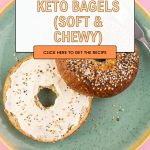
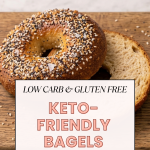
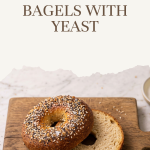
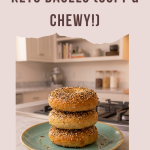
Keto Bagels (Soft & Chewy, Made With Yeast)
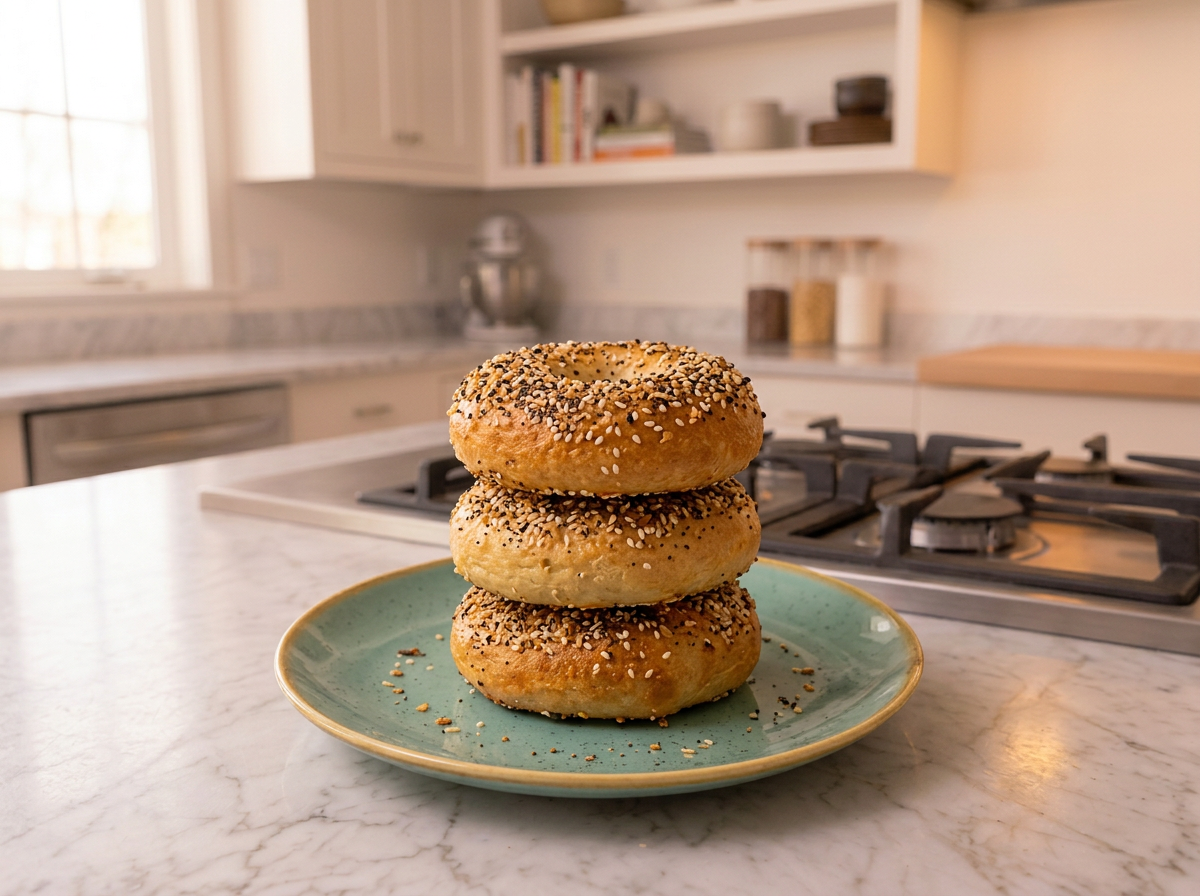
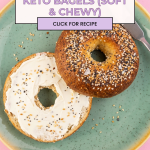
There was a long stretch after I started the keto diet when I quietly mourned bagels. Not the fancy ones — just a proper, chewy, golden bagel I could split, toast and pile high on a slow morning. So when I finally cracked a low carb bagel that actually tastes like bread (no eggy, cheesy fathead business in sight), it felt like a small miracle. These keto bagels are soft, chewy, gluten free, grain free and completely dairy free — and at just 3g net carbs each, they’ve earned a permanent spot in my ketogenic diet rotation.
Disclosure: This post may contain affiliate links that earn me a small commission, at no additional cost to you.
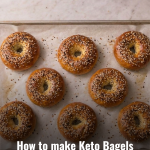
I’ve sized this batch to make 10 full-sized bagels, which is just the right number to get me through a week of breakfasts with a few tucked in the freezer.
Why you’ll love these low carb bagels
- Made with yeast — real, bakery-style flavour you simply don’t get from baking powder alone.
- No fathead dough. No melted cheese, no dairy — just almond flour, golden linseed and a few keto-friendly pantry staples.
- Just 3g net carbs a bagel, so they slot neatly into a low carb diet without blowing your day.
- Naturally gluten free and grain free, which makes them a brilliant low carb friendly option if you’re coeliac or simply off the grains.
- They toast like a dream and freeze brilliantly — proper meal-prep heroes.
- Endlessly adaptable: everything seasoning, sesame, poppy seeds, or keep them plain for sweet toppings.
A little bit about the method
Here’s the thing about grain free baking: keto flours don’t cook in water the way wheat does, so the traditional boil-then-bake bagel method just won’t work. Instead, these low carb bagels borrow a focaccia-style approach — we proof the yeast, build a thick dough, shape, prove and bake. The results are genuinely brilliant: dense, chewy and deeply golden.
You might be wondering why there’s something to “feed” the yeast. Yeast needs a little food to wake up and release the carbon dioxide that gives bread its rise. I use inulin, a prebiotic fibre — the yeast feeds on it during proving, so it doesn’t add to the net carbs of the finished bagel. It’s a neat bit of baking science, and it’s what keeps these firmly keto friendly.
Bagels are meant to be dense and chewy, so you can play with the proving time to suit you. A shorter rise (around 20 minutes) gives denser bagels; a longer one (40–60 minutes) gives something a little fluffier with a deeper, yeastier flavour. I almost always go long — the taste is worth it.
My top tips
- Weigh your ingredients. This is my number-one rule for any gluten free baking. Cups are wildly inconsistent and keto flours are notoriously fussy — a scale gives you the same result every single time.
- Bring everything to room temperature, especially the eggs. Add cold eggs and your bagels simply won’t rise.
- Re-grind your linseed (or psyllium). A quick blitz in a dry blender gives a finer powder and a much better, less slimy texture.
- Keep the dough cosy. Yeast doughs hate draughts and sudden temperature changes. I pop my tray on top of the oven as it preheats so it stays gently warm — think a warm, humid day at the seaside, not a hot one.
- Watch the colour. Check at around 12 minutes and loosely tent with foil if the tops are racing ahead.
Substitutions
- Golden linseed or psyllium husk — use them interchangeably, gram for gram. Both want a fine grind. (Heads-up: some brands of psyllium turn the crumb a greyish-purple. It’s harmless, but golden linseed keeps the colour pretty.)
- Whey protein isolate gives the best rise, but you can swap it for more almond flour — the bagels will just deflate a touch after baking.
- Xanthan gum is the gluten replacer here. If you’d rather, swap it for extra ground linseed.
- Almond flour — make sure it’s super-fine and blanched, not ground almonds/almond meal, or the bagels turn dense and oily. In keto maintenance, you can lighten them by swapping a few tablespoons of the almond flour for arrowroot.
- Yeast food — I use inulin, but any keto sweetener the yeast can feed on will do the job.
Whether you’re after an easy keto breakfast, a low carb lunch base or just a chewy slice of normality on the ketogenic diet, these gluten free, grain free bagels deliver. Make a batch, freeze a few, and you’ll never look at the bread aisle the same way again.
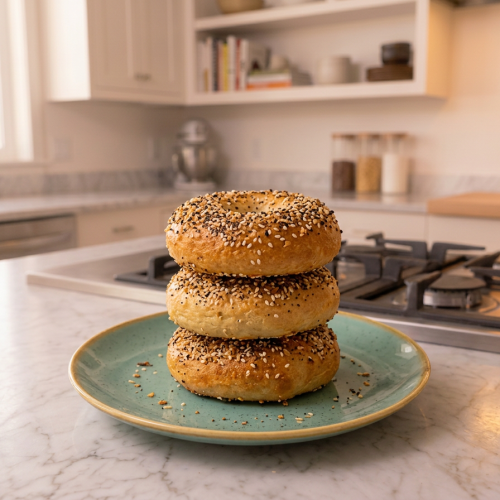
Keto Bagels
Ingredients
For the keto bagels
- 1¼ tbsp active dried yeast active dry yeast, about 3¾ tsp
- 2½ tsp inulin to feed the yeast
- 150 ml lukewarm water 40–43°C / 105–110°F
- 240 g almond flour
- 53 g golden linseed meal golden flaxseed meal, or psyllium husk, finely ground
- 25 g whey protein isolate or more almond flour
- 3 tsp xanthan gum or 1¾–2 tbsp ground linseeds (flax seeds)
- 2½ tsp baking powder
- ¾ –1 tsp flaky sea salt kosher salt, depending on toppings
- 1 large egg at room temperature
- 3 egg whites at room temperature
- 26 g extra virgin olive oil about 2 tbsp
- 1¼ tbsp cider vinegar apple cider vinegar
For the topping
- 1 egg white lightly beaten with 1 tsp water, for the egg wash
- Everything bagel seasoning to sprinkle
Instructions
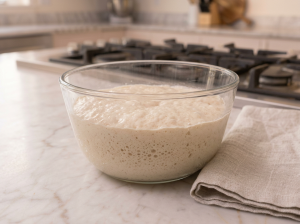
- Add the yeast and inulin to a large bowl. Warm the water to 40–43°C (105–110°F) — it should feel only lightly warm to the touch — then pour it over the yeast. Cover with a tea towel and leave for 7 minutes until bubbly and foamy. If it doesn’t foam, start again: water that’s too cold won’t activate the yeast and water that’s too hot will kill it.
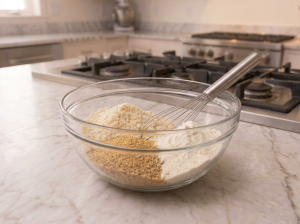
- While the yeast proofs, whisk together the almond flour, golden linseed meal (or psyllium husk), whey protein isolate, xanthan gum, baking powder and salt in a separate bowl, then set aside.
- Once the yeast is foamy, add the whole egg, egg whites, olive oil and cider vinegar. Whisk by hand or with an electric mixer for a couple of minutes until light and frothy.
- Add the dry mix in two batches, mixing thoroughly and quickly to activate the xanthan gum. The dough will become very thick and gather into a round.
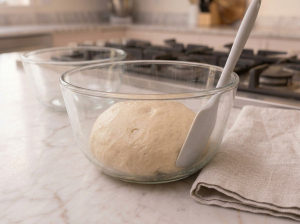
- Line a baking tray with baking paper or a silicone mat. Wet your hands and divide the dough into 10 even rounds. Smooth each one, then press your finger through the centre and stretch into a bagel shape.
- Cover loosely with oiled cling film (plastic wrap) and leave somewhere warm and draught-free for 20–60 minutes — 20 minutes for denser bagels, 40–60 for fluffier ones.
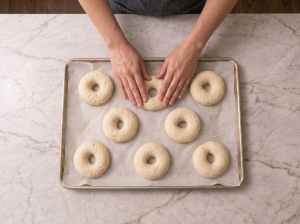
- Preheat the oven to 180°C/350°F (or 190°C/375°F at high altitude) while the bagels prove.
- Brush the tops with the egg wash and sprinkle generously with everything seasoning.
- Bake for 22–25 minutes until deep golden, checking at the 12-minute mark and loosely covering with foil if they’re browning too fast.
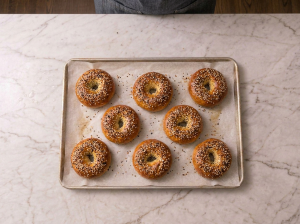
- Let the bagels cool completely on a wire rack for the best texture — or at least 15 minutes if you can’t wait, as they keep cooking as they cool.
- Store in an airtight container at room temperature for a couple of days and toast lightly before serving. They freeze brilliantly too.
Notes
| Nutrient | Per bagel | Whole batch (10) |
|---|---|---|
| Calories | 190 kcal | 1,900 kcal |
| Fat | 15 g | 150 g |
| Saturated fat | 1 g | 10 g |
| Total carbohydrates | 9 g | 90 g |
| Fibre | 6 g | 60 g |
| Net carbs | 3 g | 30 g |
| Protein | 6 g | 60 g |
| Cholesterol | 20 mg | 200 mg |
| Sodium | 166 mg | 1,660 mg |
| Potassium | 19 mg | 190 mg |