Keto Hot Cross Buns (Gluten Free, Low Carb & Sugar Free)
There’s a particular smell that, for me, is Easter: warm spice, a whisper of orange and that yeasty bakery sweetness drifting through the kitchen on Good Friday morning. When I first started the keto diet to lose weight, I made my peace with giving up a lot of things — but come easter I was missing the hot cross buns.
Disclosure: This post may contain affiliate links that earn me a small commission, at no additional cost to you.
These keto hot cross buns are the happy result. They’re gluten free, grain free, sugar free and properly low carb — just 3g net carbs a bun — yet soft, springy and beautifully spiced, with a real yeasted crumb and that classic piped cross on top. No wheat, no starches, no sugar and, whisper it, no compromise. If you’re following a low carb diet and you’ve been mourning your Easter bake, these are the buns to bring it back.
Why you’ll love these keto hot cross buns
- Genuinely low carb & keto friendly — just 3g net carbs per bun, so they slot neatly into your daily macros.
- Gluten free and grain free — not a scrap of wheat, made with almond flour and ground golden linseed (US: golden flaxseed meal).
- Sugar free — sweetened with erythritol, so there’s no blood-sugar spike and no afternoon crash.
- Made with real yeast — for that unmistakable bakery flavour and a proper springy crumb.
- Beautifully spiced — warm cinnamon, nutmeg and allspice with a bright hit of orange zest.
- A treat the whole family will eat — keto or not, nobody guesses they’re low carb.
What makes a hot cross bun keto?
Traditional hot cross buns are built on three things that don’t fit a low carb diet: wheat flour, sugar and a heap of dried fruit. So this keto version swaps all three. Wheat flour becomes a blend of super-fine almond flour, ground golden linseed and a little psyllium husk, which together give structure and that lovely chew. Sugar becomes erythritol. And the dried fruit — the trickiest bit — I’ll come to in a moment.
The clever part is the yeast. A lot of people assume yeast is off-limits on keto because bread is, but yeast itself is keto friendly — it simply needs something to feed on. Normally that’s sugar, but here we use inulin, a prebiotic fibre. The yeast happily eats the inulin and releases carbon dioxide, which is what gives the buns their rise and that gorgeous fermented, bakery aroma — all without adding any usable carbs. It’s the difference between a flat, dense “keto brick” and a bun that actually feels like a bun.
The dried fruit question
Let’s talk about the sultanas in the room. Classic hot cross buns are packed with currants, sultanas (US: golden raisins) and mixed peel — and sadly all of them are little carb bombs, so they’ve no place in a keto bake. The good news is you genuinely don’t miss them, because a generous amount of orange zest does the heavy lifting on flavour. If you’d like some texture and little pops of interest, my favourite low carb friendly add-ins are toasted pecans, sugar-free dark chocolate chunks, or homemade keto “dried cranberries” (simmer fresh cranberries in a little allulose, then dry them low and slow in the oven). All keto friendly, all delicious — and not a sultana in sight.
How to make keto hot cross buns
Don’t be put off by the ingredient list — these come together far more easily than traditional hot cross buns, with no kneading and only a single prove.
First, wake up the yeast. Pop your dried active yeast (US: active dry yeast) and a pinch of ground ginger into a large bowl. Warm the water, soured cream (US: sour cream) and inulin together until just lukewarm — between 40 and 43°C (105–110°F), barely warm on your wrist — then pour it over the yeast, cover and leave for about 7 minutes. You want it foaming and bubbly; if nothing happens, your liquid was either too cold or too hot, so start that bit again.
While the yeast proofs, whisk your dry ingredients together: almond flour, ground golden linseed, whey protein isolate, erythritol, xanthan gum, baking powder, fine sea salt (US: kosher salt) and the spices.
Once the yeast is lively, beat in the eggs, apple cider vinegar and orange zest. Add the dry mixture in three goes, alternating with the softened butter, beating until you can’t see any streaks of butter. The dough will be very sticky — that’s exactly right — so work quickly and use a wet spatula to bring it into a ball.
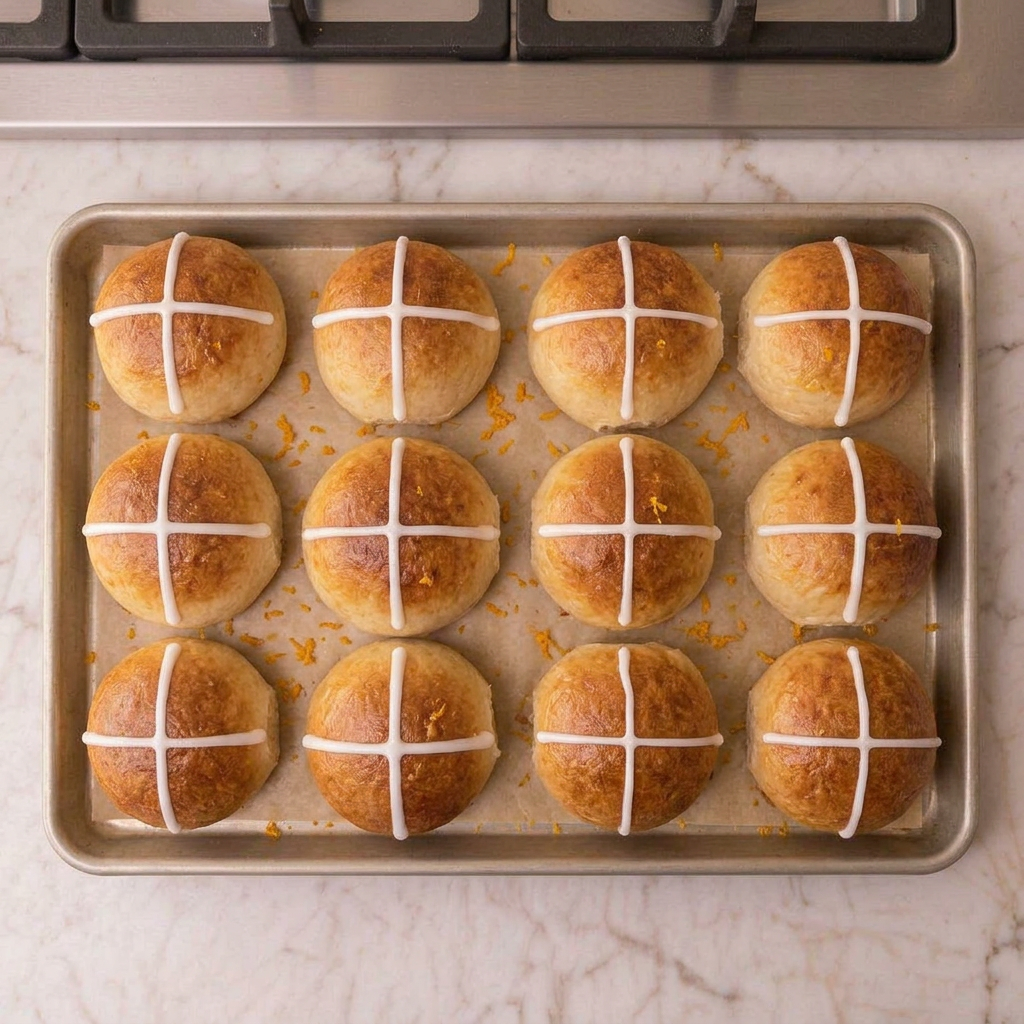
With damp hands, divide and roll the dough into 10 even rounds and sit them on a lined baking tray (US: baking sheet), leaving a little space between each. Cover with a tea towel and leave somewhere warm and draught-free until almost doubled — anywhere from 1.5 to 3 hours depending on your kitchen. This is an enriched dough, so be patient; if it’s stubborn, it just wants more warmth (the top of a gently preheating oven is perfect).
When they’re risen, brush the tops with a little egg wash (keep it off the edges so they can still rise in the oven), then bake hot to start and bring the temperature down to finish — exact times are in the recipe card. They’re done when deeply golden-brown; tent loosely with foil if they’re colouring too fast.
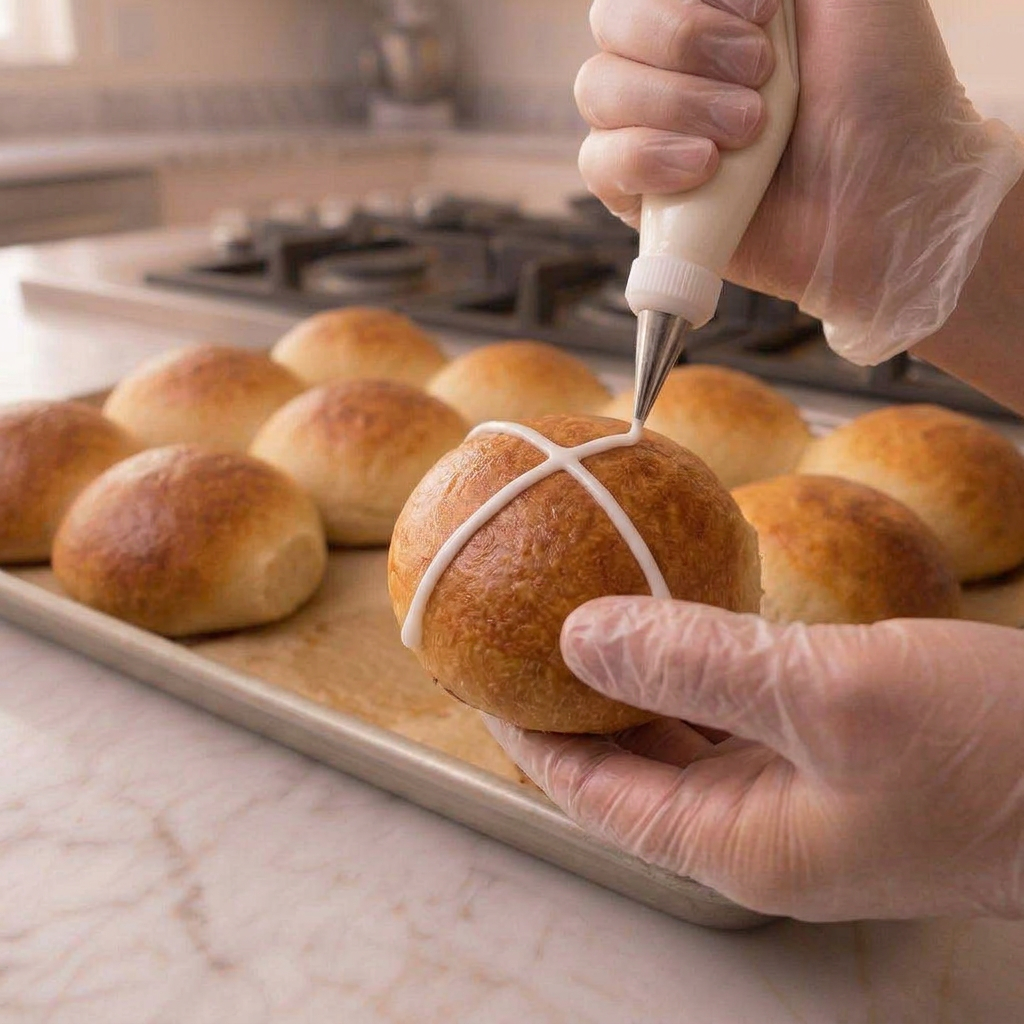
Let them cool on the tray for 20 minutes, then move to a wire rack to cool completely. I know it’s torture, but resist cutting in — they carry on cooking as they cool, and slicing early ruins the crumb. Once cold, whisk up the simple icing and pipe a cross over each one.
My top tips for perfect keto hot cross buns
- Weigh your ingredients. Keto flours are fussy and cups are wildly inaccurate — a digital scale is the best tenner you’ll spend.
- Everything at room temperature. Cold eggs are the number one reason keto yeast breads don’t rise, so take them out ahead of time.
- Re-grind your linseed and psyllium. A quick whizz in a (very dry) blender keeps the texture light and stops the buns turning slimy or grey.
- Don’t rush the prove. Almost-doubled is the goal; if your kitchen’s cold, find the warmest draught-free corner you can.
- Don’t use xylitol. It actually inhibits yeast — it’s used in dental products to stop bacteria growing — so it’ll stop your buns rising. Stick to erythritol or allulose. (It’s also toxic to dogs, so I keep it out of the house anyway.)
Substitutions & swaps
- Soured cream (US: sour cream): full-fat coconut cream works if you’re dairy-free.
- Whey protein isolate: this does important structural work and stops the buns collapsing, so I don’t recommend leaving it out — use an unflavoured isolate.
- Spices: swap the individual spices for 2 tsp British mixed spice (US: pumpkin pie spice is the nearest equivalent). A little cardamom is lovely in here too.
- Psyllium husk: replace with a little extra ground linseed, though you’ll lose some elasticity and rise.
- Sweetener: erythritol or allulose both work in the dough; for the icing I like icing-style powdered erythritol or allulose so it sets smooth.
- Add-ins: toasted pecans, sugar-free dark chocolate chunks, or homemade keto dried cranberries.
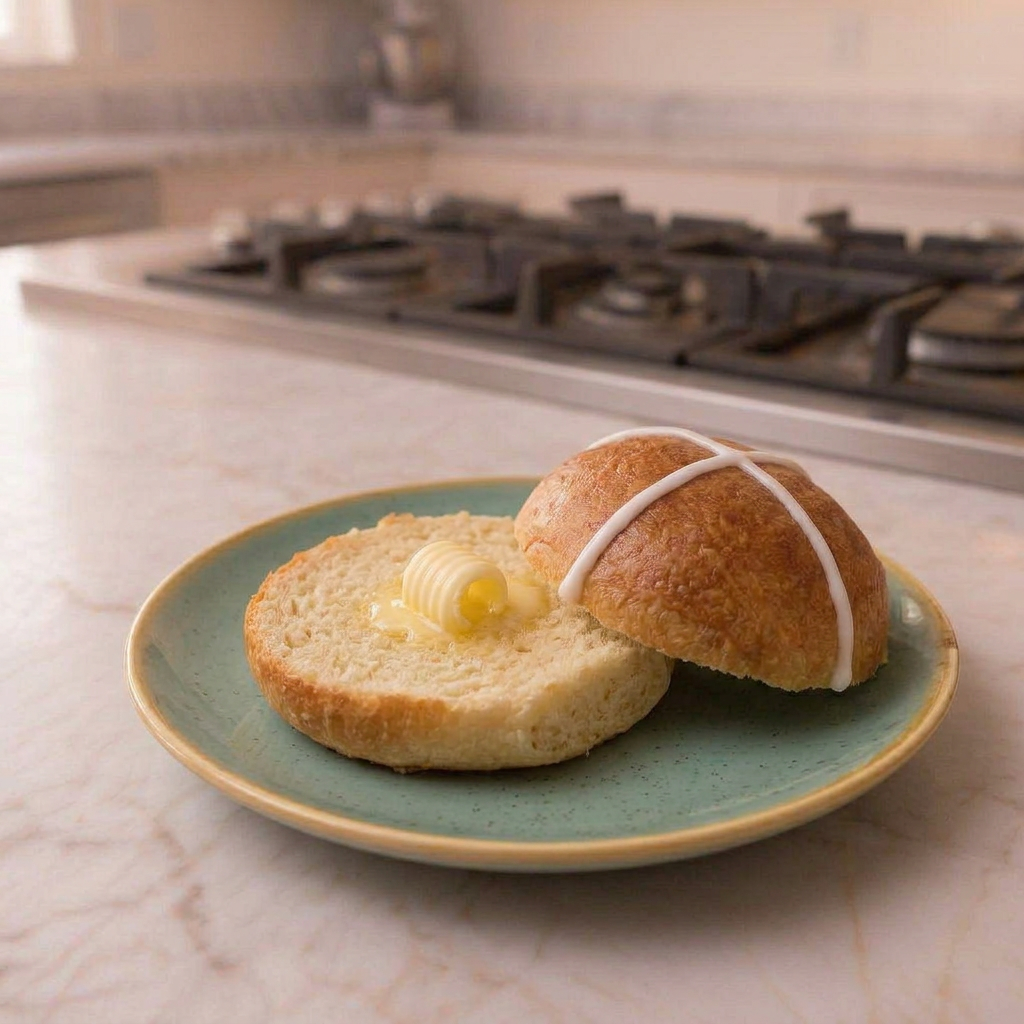
Whether you’re deep into the ketogenic diet or just dabbling in low carb recipes over the holidays, these gluten free hot cross buns are proof you don’t have to sit Easter out. Bake a batch, butter them while they’re still a little warm, and enjoy every soft, spiced, low carb friendly bite.
Keto Hot Cross Buns
Ingredients
For the buns
- 1¼ tbsp active dried yeast US: active dry yeast
- 1 pinch ground ginger optional, to help proof the yeast
- 1¼ tbsp inulin to feed the yeast
- 150 ml lukewarm water 40–43°C / 105–110°F
- 72 g soured cream US: sour cream, room temperature
- 210 g almond flour super-fine
- 104 g ground golden linseed US: golden flaxseed meal, finely ground
- 44 g whey protein isolate unflavoured
- 22 g psyllium husk powder finely ground
- 80 g erythritol or allulose
- 2½ tsp xanthan gum
- 2½ tsp baking powder
- 1¼ tsp fine sea salt US: kosher salt
- 1¼ tsp ground cinnamon
- ⅓ tsp nutmeg freshly grated
- ⅓ tsp ground allspice
- 4 eggs room temperature
- 1¼ tbsp apple cider vinegar
- 2 –2½ tbsp orange zest about 1–2 oranges
- 70 g unsalted butter softened
Optional add-ins
- ⅔ cup toasted pecans sugar-free dark chocolate chunks or keto dried fruit (see post)
- For the icing
- ⅔ cup powdered erythritol US: powdered/confectioners’ erythritol, or allulose
- ¾ tsp vanilla extract
- 1 pinch fine sea salt US: kosher salt
- 1 –4 tsp water as needed
Instructions
For the buns
- Add the yeast and a pinch of ground ginger to a large bowl and set aside.
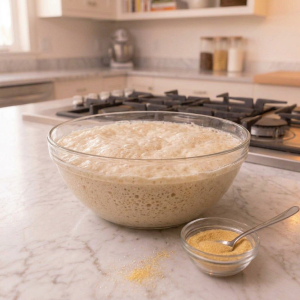
- Gently warm the water, soured cream and inulin in a small pan or heatproof bowl to 40–43°C (105–110°F) — barely warm to the touch.
- Pour the warm liquid over the yeast, cover with a tea towel and leave to proof for 7 minutes, until foamy and bubbly. If it doesn’t foam, the liquid was too hot or too cold, so start this step again.
- Meanwhile, whisk together the almond flour, ground golden linseed, whey protein isolate, erythritol, xanthan gum, baking powder, salt, cinnamon, nutmeg and allspice in a separate bowl.
- Once the yeast is foamy, beat in the eggs, apple cider vinegar and orange zest with an electric mixer until combined, about 1 minute.
- Add the dry ingredients in three additions, alternating with the softened butter, and beat until no streaks of butter remain. The dough will be very sticky — work quickly and use a wet spatula to gather it into a ball. Fold through any add-ins now.
- With damp hands, divide and shape the dough into 10 even rounds and place on a lined baking tray, leaving space between each.
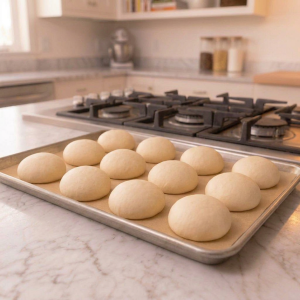
- Cover with a tea towel and leave in a warm, draught-free spot for 1.5–3 hours, until almost doubled in size.
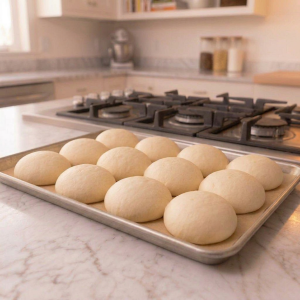
- Towards the end of proving, preheat the oven to 190°C/375°F (gas mark 5). Brush the tops lightly with egg wash, keeping it off the edges.
- Bake at 190°C/375°F for 10 minutes, then reduce to 180°C/350°F (gas mark 4) and bake for a further 15–20 minutes, until deeply golden. Tent loosely with foil from around the 10–12 minute mark if they brown too quickly.
- Cool on the tray for 20 minutes, then transfer to a wire rack to cool completely before icing.
For the icing
- Whisk the powdered erythritol, vanilla, salt and just enough water together to make a thick, pipeable paste.
- Spoon into a piping bag (or a sandwich bag with the corner snipped) and pipe a cross over each fully cooled bun.
Notes
| Nutrient | Per serving (1 bun) | Whole batch (10 buns) |
|---|---|---|
| Calories | 275 kcal | 2,750 kcal |
| Total fat | 23 g | 230 g |
| Saturated fat | 6 g | 60 g |
| Cholesterol | 80 mg | 800 mg |
| Sodium | 396 mg | 3,960 mg |
| Total carbohydrates | 10 g | 100 g |
| Dietary fibre | 7 g | 70 g |
| Sugar alcohols (erythritol) | 16 g | 160 g |
| Sugars | 1 g | 10 g |
| Net carbs | 3 g | 30 g |
| Protein | 8 g | 80 g |